


100,000+ British Home Children Sent to Canada (1869–1930s)
British Home Children and Canadian Citizenship: Who May Already Be Canadian
Important update you need to know
The legal picture for descendants of British Home Children has changed in ways that could make some people Canadian without their knowing it. Two dates matter: January 1, 1947, when Canada created its own citizenship, and December 15, 2025, when Bill C-3 removed the long‑standing “first‑generation limit” for many families. If your family story includes a child sent from Britain or Ireland to live on a Canadian farm or in a receiving home, you may already be a Canadian citizen by operation of law. This post explains the history, the legal pivot points, who may be affected, and practical next steps.
How the Home Children story connects with modern citizenship law
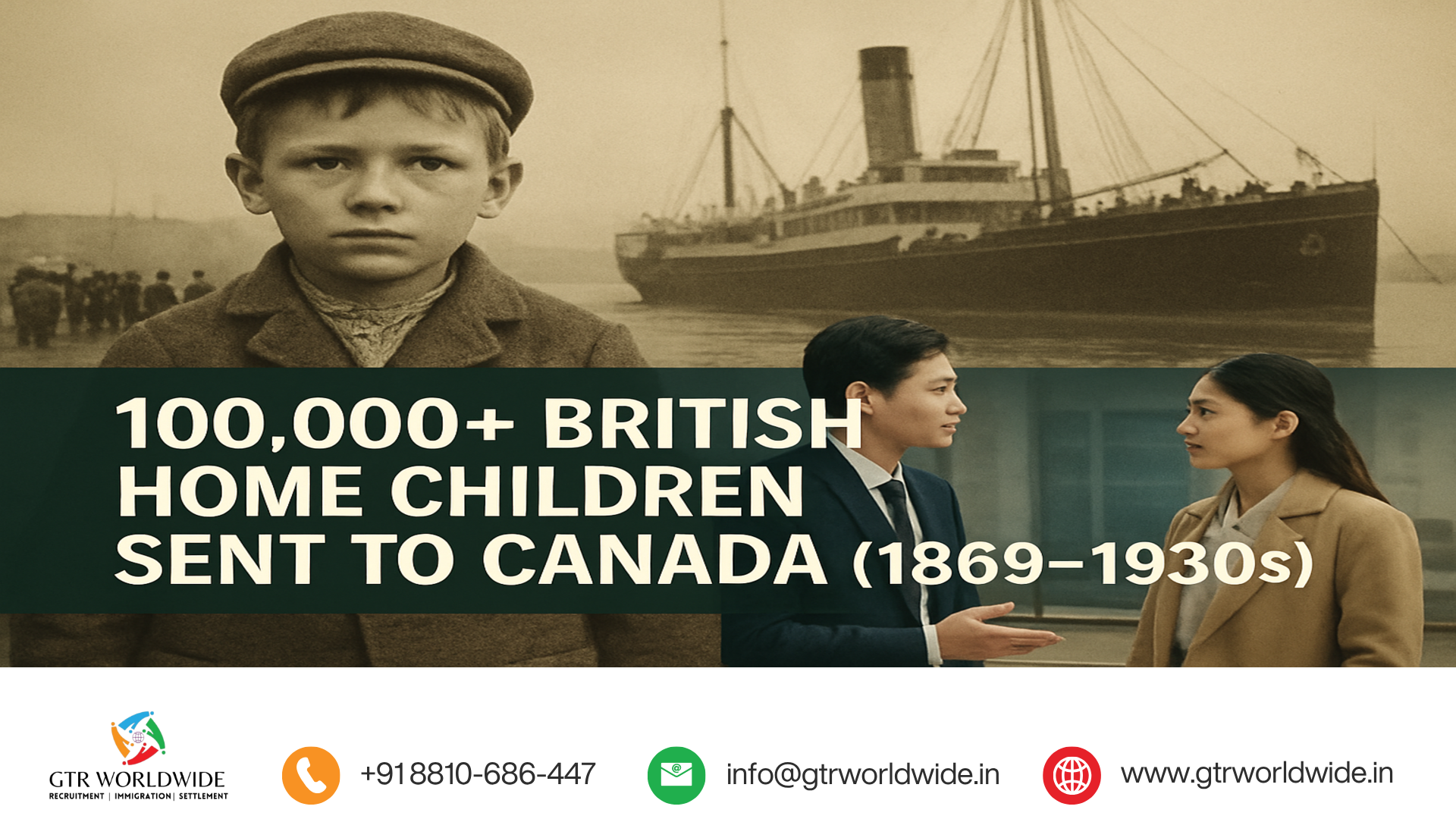
Between about 1869 and the late 1930s, British charities and relief organizations sent tens of thousands of children to Canada. Library and Archives Canada (LAC) counts more than 100,000; the UK’s National Archives counts about 80,000 up to 1930. Agencies such as Maria Rye’s, Annie Macpherson’s, and Dr. Barnardo’s Homes placed most children with rural families. Many families have kept these stories for generations; a 2010 federal estimate suggested 3–4 million Canadians descend from former Home Children.
The citizenship question turns on where a Home Child lived on January 1, 1947. Until that date, people in Canada were British subjects. Whether a Home Child was living in Canada at the creation of Canadian citizenship, and later parliamentary recognitions, affect descendants’ claims today.
Why January 1, 1947 matters — and what happened later
January 1, 1947 is the legal pivot: Canadian citizenship was created then. A Home Child living in Canada on that date may have become a citizen under the first Citizenship Act, but gaps existed. In 2015, Parliament recognized as citizens certain British subjects who were “ordinarily resident” in Canada on January 1, 1947 and had not become citizens that day. That recognition applies to citizenship status, though it has limited retrospective effect under other laws for years before it took effect.
What Bill C-3 changed and why it matters
For decades the “first‑generation limit” prevented a Canadian parent born abroad from passing citizenship to a child born abroad who was a second generation outside Canada. Bill C-3, effective December 15, 2025, removed that barrier for many families. IRCC guidance says that where a parent was a citizen at the time of a child’s birth, that child is likely a citizen in many cases. The change can extend citizenship by descent across more than one generation born outside Canada, provided each link in the chain is documented.
Who may now be Canadian because of these changes
Pay attention if you are:
– A descendant of a British Home Child who lived in Canada on January 1, 1947 or whose status was later recognized by Parliament in 2015.
– Someone whose family chain includes a Canadian‑born parent or an ancestor recognized as a citizen in 1947, but who was previously blocked by the first‑generation limit.
– A relative of Home Children who settled in border communities (for example, Buffalo or upstate New York) where the same principles apply.
The legal chain depends on proving each generation’s status and residence. A past renunciation or missing records can interrupt transmission.
Practical impact and next steps
If you find a Home Child ancestor in your family:
– You may already be a citizen by operation of law, but you will still need a proof of citizenship certificate (for example, to get a Canadian passport).
– Canada allows dual citizenship; claiming or proving Canadian citizenship does not require giving up another citizenship.
– Documentation is key: birth certificates, passenger lists, census entries, and records showing residence on January 1, 1947 are central.
– Placement or adoption records alone do not prove citizenship; combine them with civil records.
– Cases with deaths before relevant law changes or births before 1947 often need individual legal assessment.
Where to look for evidence
Start with family memory, then search records:
– Ask oldest relatives about crossings, farm placements, receiving homes (for example, Fairknowe or Marchmont), agency names (Barnardo, Quarrier, Macpherson, Middlemore, Rye), or heirlooms.
– Search LAC’s Home Children records by name and approximate arrival year; entries often list ship, arrival date, and sending agency.
– Confirm crossings with passenger lists and arrival manifests.
– Establish where the ancestor lived on January 1, 1947 using census, passenger, and vital records.
– Build the chain with birth records for each generation. IRCC holds many citizenship files and lists alternative evidence it may accept where standard records are missing.
Common documentary hurdles and legal caveats
Expect challenges such as missing records, proving “ordinary residence” on January 1, 1947, past renunciations of status, and limited retroactivity of later legal changes. When facts are complex, seek individual legal advice.
Organizing a practical search and application plan
A step‑by‑step approach:
– Identify the Home Child ancestor and collect family clues.
– Search LAC Home Children records and passenger lists to confirm arrival details.
– Document residence on January 1, 1947.
– Assemble birth records for each generation to you and check for any renunciations.
– Gather alternative evidence if official records are missing and consider professional help if the chain is complex.
– If your documentation supports a claim, apply to IRCC for a proof of citizenship certificate.
A real-life echo
Nine‑year‑old Rob Greenhorn sailed from Scotland on the S.S. Siberian and arrived in Halifax on March 26, 1889. He was placed at Fairknowe Home in Brockville and later sent to a farm. Decades later, his granddaughter discovered his Home Child status while working at Library and Archives Canada. Many families have similar stories of ancestors whose status was forgotten or unknown. In 2018 the House of Commons unanimously voted to designate September 28 as British Home Child Day in Canada.
Key dates and numbers to keep in mind
– Circa 1869 to late 1930s: period when British agencies sent children to Canada (LAC counts more than 100,000).
– 1882–1939: Dr. Barnardo’s Homes sent about 30,000 children.
– March 26, 1889: example arrival date for Rob Greenhorn on the S.S. Siberian.
– January 1, 1947: Canadian citizenship was created; crucial for assessing who became a citizen.
– 2015: Parliamentary recognition of British subjects “ordinarily resident” in Canada on January 1, 1947 who had not become citizens that day.
– December 15, 2025: Bill C-3 removed the first‑generation limit for many families.
– 2010 federal estimate: 3–4 million Canadians may descend from former Home Children.
If you find a Home Child ancestor, your siblings, cousins, and their children may also have claims. The records you gather can support multiple family applications.
For personalized support with your Canadian immigration pathway, contact GTR Immigration. Call us: +91-8810-686-447
#BritishHomeChildren #CanadianCitizenship #CitizenshipByDescent #Canada1947 #BillC3 #FamilyHistory #ImmigrationRecords #ProofOfCitizenship