


Can a Photocopy Baptismal Record Prove Canadian Citizenship by Descent?
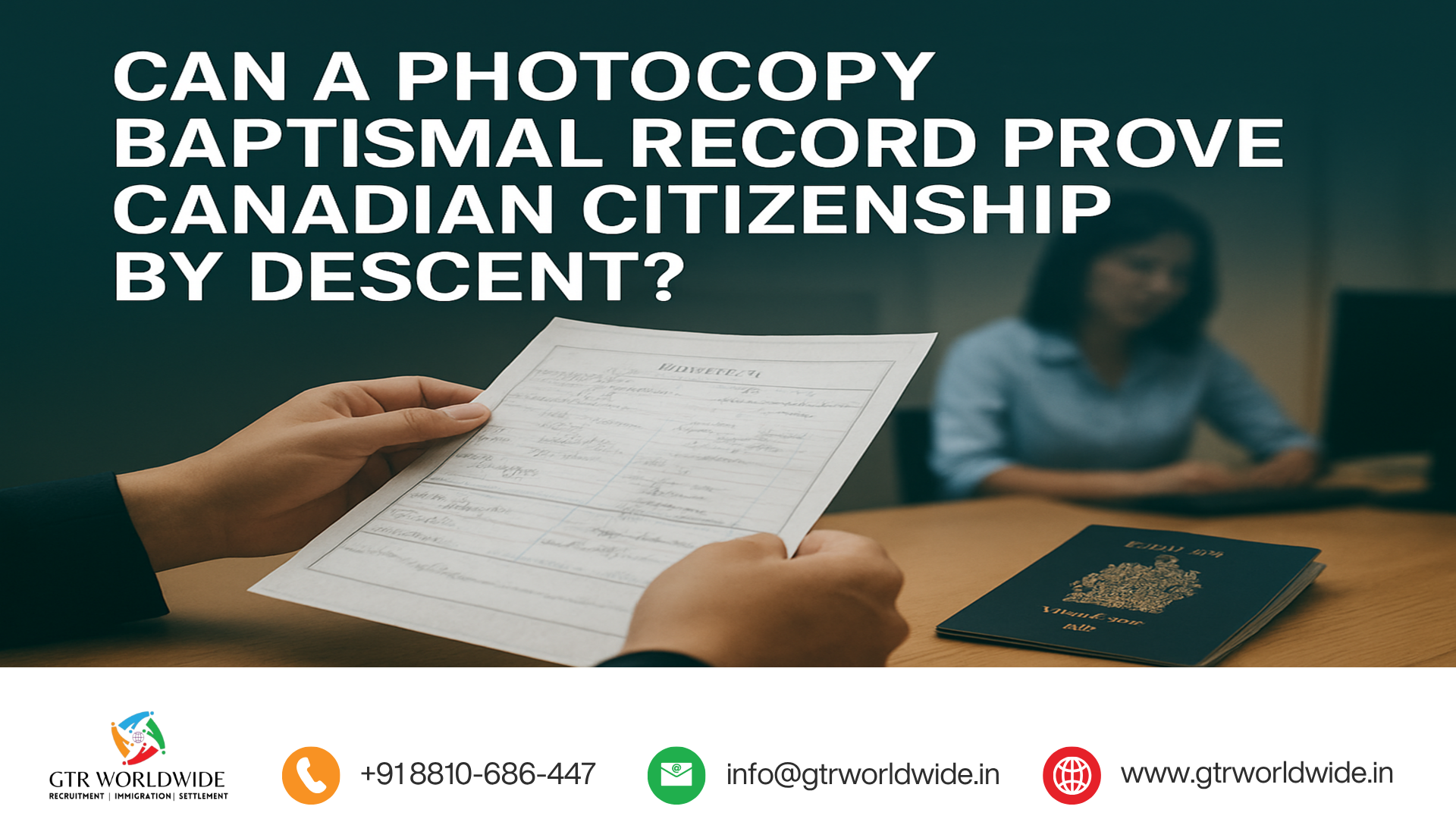
Canadian citizenship by descent: IRCC’s ACA presentation shifts focus from certified copies to source authority
What changed and why it matters
IRCC told the Association of Canadian Archivists (ACA) that for citizenship-by-descent claims the provenance of a document matters more than whether a copy is certified. Certification is not required up front, but an officer can ask for a certified copy if they doubt a document’s authenticity. This affects which records applicants should prioritise and how they prepare their file.
How this fits recent context
IRCC shared slides with the ACA and answered questions during the session; the ACA published a summary. The slides reiterate that IRCC wants records issued by the original authority that created or maintains them (civil registries, vital statistics offices, archives, dioceses). After practitioner focus around IRCC’s June review of Bill C-3 certificates, some guides recommended certified copies — the presentation clarifies that certification is not the initial requirement, though it remains a useful precaution.
IRCC’s evidence framework: primary vs secondary
IRCC separates evidence into two tiers:
Primary documents (applicants should provide these for each ancestor) include:
– Canadian provincial/territorial birth certificates
– Foreign birth certificates showing parent–child links across generations
– Canadian citizenship or naturalization certificates
– Certificates of Registration of Birth Abroad or Retention of Canadian Citizenship
– British naturalization certificates issued in Canada/Newfoundland and Labrador
– Proof of British subject status before Jan 1, 1947 (or before Apr 1, 1949 for Newfoundland and Labrador)
Secondary documents (may be considered alongside primary evidence) include:
– Hospital birth records, midwife/physician records
– Baptismal certificates and parish registers
– Census records
– Canada Gazette naturalization notices
– Passenger manifests, marriage and death records, military records, passports
IRCC says the secondary list is not exhaustive and officers must assess all relevant evidence provided. Crucially, a secondary document does not replace an existing primary one. Also, documents issued by the original authority (for example, a diocesan copy of a baptismal register) are treated differently than third‑party printouts or screenshots from genealogy sites.
What to provide and how claims are decided
Paper applicants should send clear colour copies; online applicants should upload high-resolution colour scans or images. IRCC assesses citizenship-by-descent claims on a balance-of-probabilities standard, weighing the totality of evidence. The ACA summary also notes two practical points from the Q&A: a formal “No Record Found” letter is not always required before filing, and officers may request certified copies if authenticity is in question.
How this affects photocopies and church records
A photocopy of a baptismal record may help if it comes from the diocese or archive that holds the register. A printout or screenshot from a genealogy website is a third‑party copy and cannot, on its own, support a claim. In Quebec, where parish registers served as the civil register for long periods, diocesan registers can be key evidence, but they remain secondary unless supported by original-authority documentation.
Five applicant scenarios (what to do next)
– Sufficient: You have primary documents from the issuing authority for every generation, with matching names/dates. Action: prepare and file.
– Potentially useful: You have most primary documents and original-authority secondary records for others (e.g., a diocesan baptismal act or a Gazette entry). Action: strengthen the file and ensure no generation rests only on secondary evidence.
– Missing a link: One generation relies solely on a genealogy-site printout. Action: order the original from the office that created or maintains it before filing.
– Requires further verification: Records exist but contain unexplained name/date mismatches. Action: provide corroborating documents (marriage certificates, name-change records) or a clear written explanation; a certified copy can help if authenticity is questioned.
– Likely requires professional review: The chain breaks where source records can’t be found or an ancestor’s status cannot be confirmed. Action: get a specialist to review before chasing unlikely leads.
Canada Gazette entries: an underused secondary source
IRCC noted the Canada Gazette published names of people naturalized in Canada up to 1952. Library and Archives Canada holds the lists for 1915–1951 (1915–1946 searchable by name; 1947–1951 available as images searchable by month/year). A Gazette entry can help when a naturalization certificate is lost, but it is secondary evidence and does not cover people born in Canada who were British subjects by birth.
Practical priorities before you file
– Identify the original authority for each record and obtain documents directly from that source where possible.
– Sort records into primary and secondary tiers and confirm no generation relies only on third‑party copies.
– Resolve mismatches with supporting documents or explanations.
– Consider certified copies where available to reduce follow-up requests.
– Use Canada Gazette entries when they can corroborate a lost naturalization certificate.
– Seek professional review if the chain of citizenship breaks or records are missing.
Final cautions
IRCC’s presentation and the ACA summary reflect departmental thinking at the time of the session; guidance can change, so check IRCC’s official webpages for current requirements. IRCC retains discretion and may still request additional evidence, including certified copies, if authenticity concerns remain.
For personalised support with your Canadian immigration pathway, contact GTR Immigration. Call us: +91-8810-686-447
#CanadianCitizenship #CitizenshipByDescent #IRCC #CanadaImmigration #Genealogy #Documentation #CanadaGazette