

Canada’s New TR to PR Pathway Excludes Major Cities in 2026
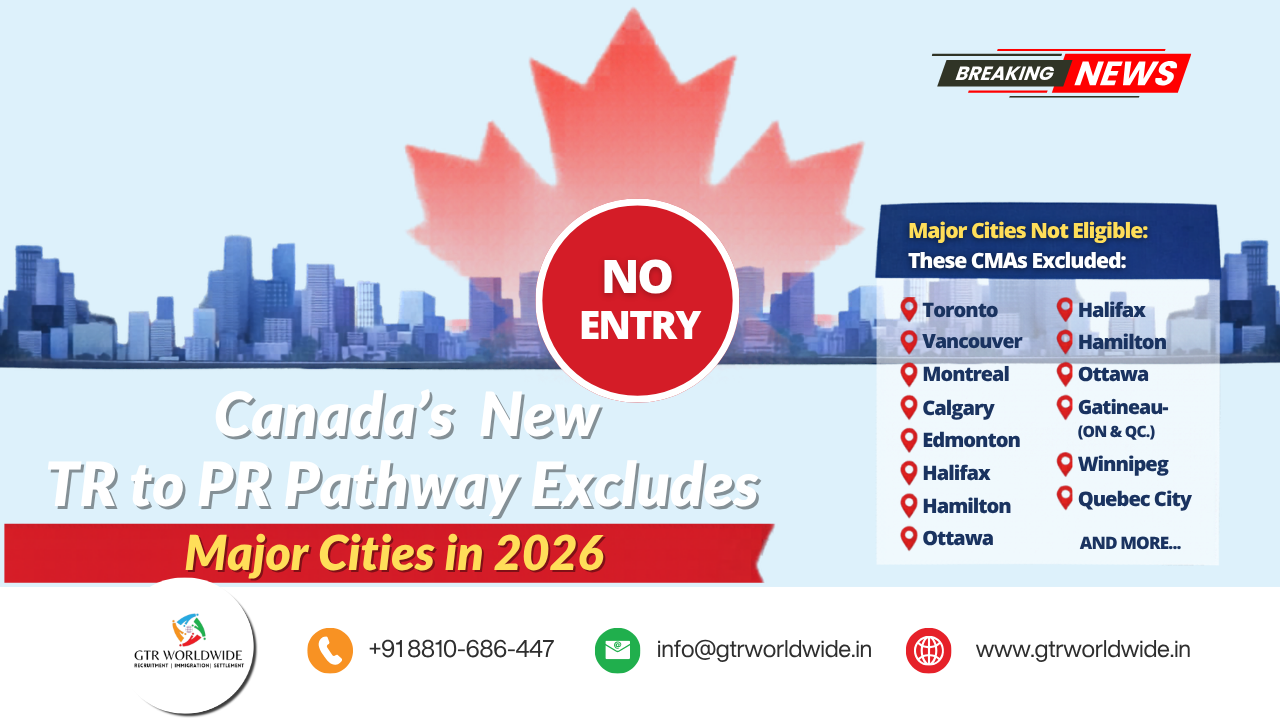
Canada’s highly anticipated new Temporary Resident to Permanent Resident (TR to PR) pathway for 2026 has taken a major turn. Immigration Minister Lena Metlege Diab has confirmed that temporary workers living in major Canadian cities—including Toronto, Vancouver, and Montreal—will not be eligible under the new pathway.
Instead, the program will prioritize workers living and working outside Census Metropolitan Areas (CMAs), focusing on rural and smaller communities across Canada. This update significantly changes the immigration strategy for thousands of temporary residents hoping to secure permanent residence.
What Is Canada’s New TR to PR Pathway?
The new TR to PR pathway is a one-time immigration measure designed to grant permanent residence to up to 33,000 temporary foreign workers over 2026 and 2027. The initiative targets workers already contributing to Canada’s labor market, particularly in sectors facing serious shortages such as healthcare, agriculture, food processing, and skilled trades.
Unlike the broad 2021 TR to PR program, this new pathway follows a “regional-first” model, giving preference to workers settled outside Canada’s major urban centers.
Which Cities Are Excluded?
Minister Diab clarified that all Census Metropolitan Areas (CMAs) will be excluded from this pathway. This means applicants living in Canada’s largest urban centers will not qualify.
Some major excluded cities include:
- Toronto
- Vancouver
- Montreal
- Calgary
- Edmonton
- Halifax
- Hamilton
- Kitchener–Cambridge–Waterloo
- Ottawa–Gatineau
- Winnipeg
- Quebec City
Statistics Canada currently recognizes 41 CMAs across the country, covering approximately 84% of Canada’s population. This means the majority of temporary residents in urban Canada may not be eligible for this specific pathway.
Why Is Canada Excluding Major Cities?
The federal government aims to reduce temporary resident concentration in major cities while addressing labor shortages in smaller communities and rural regions.
By limiting eligibility to non-CMA regions, Canada hopes to:
- Strengthen regional economies
- Support employers in rural communities
- Encourage long-term settlement outside major urban hubs
- Reduce housing and infrastructure pressure in large cities
This strategy aligns with Canada’s broader immigration policy shifts for 2026.
Who May Still Qualify?
Temporary residents may still qualify if they:
- Live and work outside a CMA
- Hold valid temporary resident status
- Work in an eligible in-demand occupation
- Have Canadian work experience (likely at least one year)
- Meet minimum language requirements (possibly CLB 4+)
Final eligibility details from IRCC are expected soon, but workers in rural communities are advised to begin preparing documents now.
What If You Live in Toronto, Vancouver, or Another CMA?
If you are currently living in a major city, this pathway may not be available—but your PR options are not over.
Alternative immigration pathways include:
1. Express Entry
Improve your CRS score through:
- Higher language scores (CLB 9+)
- More skilled work experience
- French proficiency
- Canadian education credentials
2. Provincial Nominee Programs (PNPs)
Programs like OINP, BC PNP, and Alberta pathways still actively recruit skilled workers in urban centers.
3. Employer-Supported Options
LMIA-supported work permits and employer sponsorship can still create strong PR pathways.
Conclusion
The new TR to PR pathway is no longer a broad “open-to-all” permanent residence option. It is now clearly a rural-focused immigration stream aimed at retaining workers outside major cities.
For temporary residents in Toronto, Vancouver, Montreal, and other CMAs, the message is clear: this pathway may be closed, but strategic alternatives remain available.
Understanding your location, your occupation, and your best PR route is now more important than ever.