

Major PNP Change 2026: Provinces Now Control Key Immigration Decisions in Canada
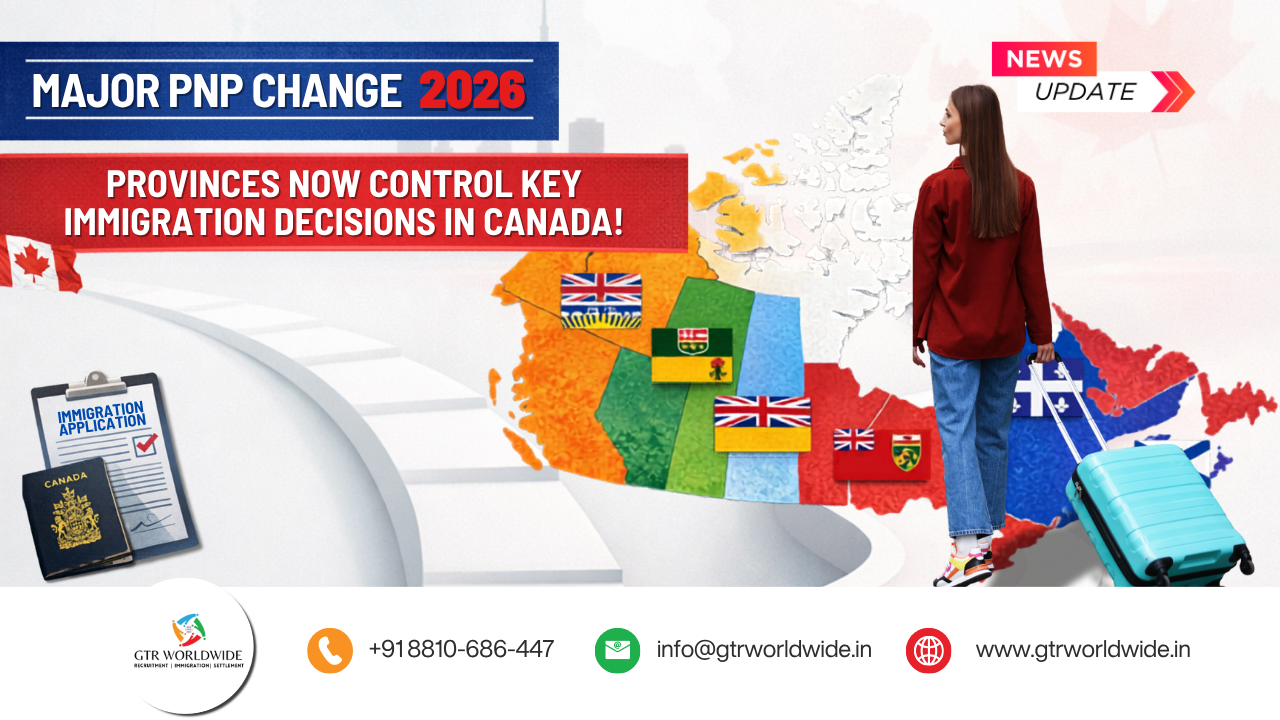
Canada has introduced a major reform to its immigration system in 2026, fundamentally changing how Provincial Nominee Program (PNP) applications are assessed. Under the new policy, Immigration, Refugees and Citizenship Canada (IRCC) has shifted critical eligibility decision-making powers to provinces and territories.
This change, effective March 30, 2026, marks a significant step toward decentralizing immigration and giving provinces greater control over selecting candidates who meet their economic needs.
What Has Changed in the PNP System?
Previously, even after receiving a provincial nomination, applicants still faced federal reassessment on two key criteria. That is no longer the case.
Provinces and Territories Now Decide:
- Applicant’s intent to reside in the nominating province
- Applicant’s ability to become economically established
What Has Been Removed:
- Duplicate assessment of these criteria by IRCC
- Risk of refusal due to conflicting federal and provincial decisions
This means a provincial nomination now carries significantly greater authority than before.
What IRCC Still Controls
Despite this shift, Immigration, Refugees and Citizenship Canada still has the final say on admissibility and approval.
IRCC continues to assess:
- Identity verification
- Validity of nomination
- Medical exams
- Criminality and security checks
- Proof of funds
- Eligibility under Express Entry (for enhanced PNP streams)
Important:
A nomination does not guarantee permanent residence, but it is now far more influential.
Who Does This Apply To?
The new rules apply broadly:
- All new PNP applications submitted after March 30, 2026
- Existing applications that have not yet passed eligibility review
What Happens If IRCC Has Concerns?
If IRCC questions an applicant’s:
- Intent to reside, or
- Economic establishment
They can no longer refuse the application directly.
Instead:
- IRCC must consult the province or territory
- The province has 60–90 days to respond
- They will either:
- Confirm the nomination
- Withdraw the nomination
This ensures provinces remain the final authority on these criteria.
Why Canada Made This Change
1. Eliminate Duplication
Previously, both provincial and federal governments assessed the same factors, causing inefficiencies.
2. Improve Processing Times
Removing duplicate checks is expected to:
- Speed up application processing
- Reduce inconsistent refusals
3. Strengthen Regional Immigration
Provinces can now better:
- Address local labor shortages
- Select candidates aligned with regional economic priorities
What This Means for Immigration Applicants
Key Advantages
- Lower risk of refusal after nomination
- More transparent decision-making
- Faster overall processing timelines
New Challenges
- Stricter screening at the provincial stage
- Higher importance of a strong, well-prepared PNP application
How to Strengthen Your PNP Application in 2026
With provinces now holding more power, your application strategy must adapt.
Proving Intent to Reside
Include evidence such as:
- Job offers in the province
- Family or community ties
- Previous work or study experience
- Settlement plans
Demonstrating Economic Establishment
Focus on:
- In-demand occupation
- Canadian work experience
- Language proficiency (IELTS/TEF)
- Relevant education and skills
- Proof of sufficient settlement funds
A Bigger Shift in Canada’s Immigration Strategy
This reform reflects a broader trend:
Canada is moving toward a decentralized immigration model
Provinces are becoming the primary decision-makers in economic immigration
This aligns with:
- Increasing PNP quotas
- Growing regional workforce demands
- Long-term economic planning
Conclusion
The 2026 PNP reform is one of the most important updates to Canada’s immigration system in recent years.
Key Takeaways:
- Provinces now control major eligibility decisions
- IRCC focuses on admissibility and final approval
- A strong provincial application is now more critical than ever
Planning to apply for Canada PR through PNP in 2026?
Now is the time to optimize your profile and target the right province strategically.Get expert guidance to:
- Choose the best PNP stream
- Strengthen your application
- Maximize your chances of approval