


Read Quebec Baptism Records Without Knowing French
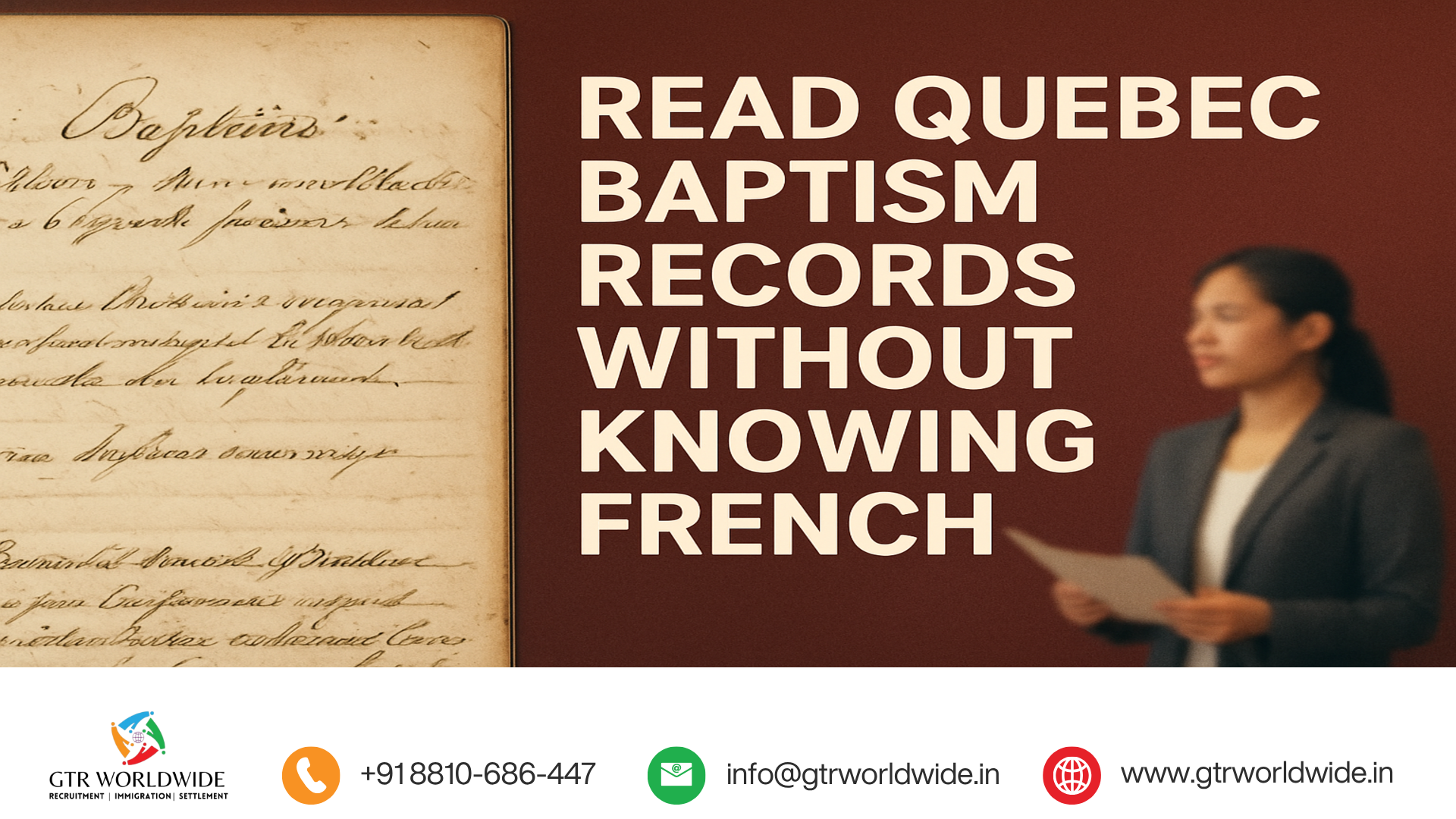
Quebec parish baptism records and Canadian citizenship by descent: how to read, verify, and use them
Why these records matter now
Quebec Catholic parish baptismal entries are often essential evidence in citizenship by descent claims. They can look like dense 19th‑century French script, but the entries follow a fixed template, so you can reliably pull the same facts in the same order across parishes. Equally important: IRCC applies strict rules about the source and issue date of Quebec documents — for example, birth or marriage certificates issued before January 1, 1994 are not acceptable. If you plan to rely on a baptismal act, you need both the ability to read the entry and to obtain an acceptable copy from the correct authority.
Who created the records and where to look
Catholic priests in Quebec recorded parish acts under rules set by civil authorities. Because they used a consistent form, each entry usually contains the event type, the date written in words, the baptism formula, birth timing, parents’ details, godparents, and signatures. Many registers are digitized and searchable in FamilySearch, GenealogyQuebec’s Drouin Collection, and BAnQ’s digital holdings. Quebec determines which office issues an official civil document by the event’s age: older records are held by BAnQ, while more recent civil documents come from the Directeur de l’état civil. Remember: IRCC checks the issue date on the certificate, not the date of the event.
The six elements to read in order
You can read most baptismal acts without fluent French by scanning these elements:
– Margin marker: A letter at left — B = baptême (baptism), S = sépulture (burial). Read this first to confirm the act type.
– Date: Written in words (e.g., “Le dix‑neuf de décembre mil huit cent vingt‑deux” = 19 December 1822).
– Verb and name: Look for “baptisé” (male) or “baptisée” (female) followed by the given name(s).
– Birth timing: Phrases like “née de ce jour,” “née hier,” or “née aujourd’hui” place the birth within a day or two of the baptism.
– Parents: The formula “du légitime mariage de” introduces father and mother; mothers are recorded by their maiden name.
– Godparents and signatures: “Parrain” and “marraine” list sponsors; notes like “qui n’ont su signer” indicate inability to sign and a priest’s signature instead.
Why these small details matter for citizenship claims
Parish acts often include the mother’s maiden name, the father’s trade (e.g., cultivateur, journalier, huissier, marchand), and a named parish — all are strong clues to link people across records. Godparents’ names and marginal corrections can also clarify family relationships and explain name patterns.
Common causes of apparent mismatches
Expect some predictable differences between baptismal entries and later documents:
– Multiple given names: Priests often recorded two or three names in a set order (first commonly Marie or Joseph, second often from a godparent, third the everyday name). People may use a different given name in later records.
– Corrections and marginal notes: Priests recorded corrections in the margin or at the end of the act.
– Different hands: Both the curé and a vicaire could write entries; handwriting varies but the form stays the same.
– Unnamed or early deaths: A child who died before baptism may appear as “enfant anonyme.”
– Non‑French or Latin forms: Foreign names were francophonized; some early records are in Latin. Expect spelling variants.
How to confirm you have the right person
Small parishes had many relatives with repeating names. Do not rely on the child’s first recorded name alone. Instead:
– Match both parents’ names when possible — that is the strongest link.
– Use the father’s trade and parish as tiebreakers.
– Check whether the entry says “de cette paroisse” (same parish) or names another parish.
– Search nearby entries, marriage acts, and godparent relationships in the same register to tie people together.
What IRCC requires and common pitfalls
IRCC expects documents from the authority that created or keeps the record, and the issuer must appear on the document. Practical points:
– Issue date matters: Certificates issued before January 1, 1994 are not acceptable to IRCC. If you find a printed Quebec document predating 1994, order a new one from the appropriate office.
– BAnQ can provide certified copies of parish register acts for the pre‑1994 period; it does not issue modern birth certificates for those older events.
– The Directeur de l’état civil issues modern civil documents for more recent events.
– If you cannot produce a record, IRCC asks for a written explanation and proof of your search efforts.
Where to view registers and what to expect
Start with FamilySearch, GenealogyQuebec’s Drouin Collection, and BAnQ’s digital archives. Expect pages with many monthly entries rather than a single tidy certificate. Check the left margin for the event letter and the name used as the index. The register’s front pages usually identify the parish; many entries use “de cette paroisse” and assume you know which register you are viewing.
Practical checklist before submitting to IRCC
– Confirm the margin letter (B or S).
– Transcribe the full date written in words.
– Note the baptism verb and gender ending.
– Record the birth timing phrase.
– Capture both parents’ names and the mother’s maiden name.
– Note the father’s trade and any named parish.
– Transcribe godparents and any marginal corrections.
– Check signatures and notes like “qui n’ont su signer.”
– Verify the document issuer and issue date; re‑order if the printed certificate predates Jan 1, 1994.
– If a record is missing, prepare documented proof of your search and a written explanation for IRCC.
How to handle name discrepancies in an application
Explain clergy naming conventions and show multiple supporting records that tie the baptismal act to later documents. Demonstrate links such as the father’s trade, parish, or consistent family relationships across records to address IRCC concerns.
For personalized support with your Canadian immigration pathway, contact GTR Immigration. Call us: +91-8810-686-447
#CanadianCitizenship #QuebecGenealogy #CitizenshipByDescent #IRCC #BAnQ #ParishRecords #GenealogyTips